
JCIP Weekly Brief
JCIPWB2611#2 · 8 November 2026
Focus From 1 to 8 November: a source-code trade secret ruling, China's examination plan to 2030, three UPC cases, Delhi jurisdiction rules and the UK inquiry into Meta's terms.
Compiled from the 24 news updates published in J&C Intellectual Property's news section from 1 to 8 November 2026, checked through 8 November.
This week at a glance
On 5 November the IP Court of China's Supreme People's Court published the key holding of case (2023) Zui Gao Fa Zhi Min Zhong No. 539: an operations employee with access to a game's source code who downloaded and took it before resigning, his former manager and the manager's new company jointly infringed trade secrets and must pay CNY 500,000 in damages and CNY 398,760 in costs.
On 3 November China's National Intellectual Property Administration (CNIPA) published its 15th Five-Year Plan for patent and trademark examination, which puts AI inventorship and AI-use declarations under study. On 6 November ZTE and Samsung were allowed to withdraw their suits against each other at the UPC Mannheim Local Division, and on 3 November the Delhi High Court returned 17 IP complaints for lack of territorial jurisdiction.
This week’s focus
China's Supreme People's Court: an employee entitled to access source code still infringes by taking it; three defendants jointly liable for about CNY 900,000
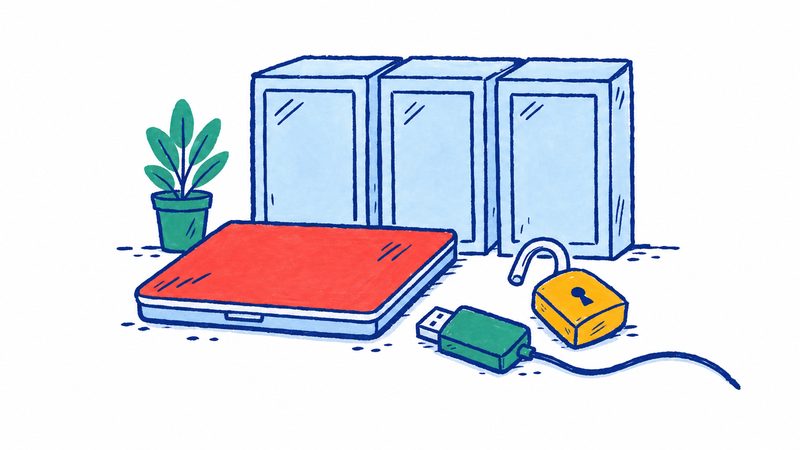
In case (2023) Zui Gao Fa Zhi Min Zhong No. 539, a Beijing game company claimed the source code of its strategy game World of Dragons as a trade secret. An employee responsible for operating the technical platform downloaded the code in stages during the month or so before he gave notice, and stored it on a computer the company had not issued. The money for that computer came from the former business lead, who had already left and set up a competing company, and the invoice named the new company as buyer. Both men had signed confidentiality, non-compete and IP agreements. On 28 December 2022 the first-instance court dismissed all of the company's claims: the employee was entitled to access the code, and the evidence showed only that he obtained it, not that he disclosed or used it.
On 11 September 2024 the Supreme People's Court set that judgment aside. Being entitled to access a trade secret does not make the way it was obtained, or what was done with it afterwards, legitimate; the question is whether the intent, method and later conduct caused or could cause the owner to lose effective control of the secret. The company had never allowed copying to personal devices or taking the code home, and the employee deleted operation logs and altered jump-server login records. The court found that he obtained the code by theft and breached his duty of confidentiality, that the former lead incited, induced and assisted him, and that the new company both directed the conduct and benefited from it. All three must stop disclosing and using the code until it becomes public, sign a confidentiality undertaking within 30 days, and jointly pay CNY 500,000 in damages and CNY 398,760 in reasonable costs; continued use carries a penalty of CNY 50,000 a day.
Impact assessment A confidentiality agreement alone does not protect source code. Prohibit in writing copying to personal devices and removal from the office, keep complete access, download and login logs, and review them closely around the time an employee gives notice. The appeal turned on two facts: the company had never permitted the code to leave, and the employee deleted and altered logs.
China's National Intellectual Property Administration publishes its 2026–2030 examination plan: AI inventorship and AI-use declarations under study, and deceptive trademarks to be invalidated ex officio

CNIPA published its 15th Five-Year Plan for patent and trademark examination on 3 November. The notice is dated 19 October, covers 2026 to 2030, and the public version is marked as abridged. The first of its seven projects, on examination rules for emerging fields, names three questions for study: how to define the person skilled in the art and the scope of prior art for AI-assisted inventions; who the inventor is, and whether a patent can be granted, for AI-generated inventions; and whether applicants should declare their use of AI. The findings will feed into revisions of the Patent Examination Guidelines and the trial Guidelines for AI-related invention applications. The same project covers examination policy for standard-essential patents and design protection in virtual and augmented reality.
The trademark part assumes the amended Trademark Law is in force and the implementing regulations are revised. It plans examination standards for new types of mark and wider use of the intent-to-use undertaking for applications. Registered marks that are deceptive are to be invalidated ex officio, and the provision on revoking marks used in a misleading way is to be enforced. For bad-faith filings, CNIPA plans to look through to the real applicant, to monitor agencies that knowingly file bad-faith applications through a list-based system, and to use company registration data to identify bad-faith applicants. Most items are worded as study, exploration or improvement; concrete rules will come only with revised guidelines, regulations or guidance.
Impact assessment Current examination standards have not changed because of the plan. Applicants who use AI tools in research should start recording each human inventor's specific contribution and how AI was used. Companies filing trademarks in China should keep filing volumes in line with real business needs, keep evidence of intent to use and actual use, and check an agency's track record before instructing it.
ZTE and Samsung withdraw their UPC Mannheim suits and Samsung's 20% fee refund is refused; Dai Nippon Printing wins a German and French injunction, and Enanta's patent is held invalid
On 6 November the Mannheim Local Division of the Unified Patent Court (UPC) allowed ZTE and Samsung Electronics to withdraw their suits against each other under Rule 265 of the Rules of Procedure. ZTE had sued Samsung Electronics and seven European subsidiaries on EP 3 577 874 (UPC_CFI_847/2024, value EUR 8 million), and Samsung had sued seven ZTE companies on EP 4 096 288 (UPC_CFI_188/2025, EUR 4 million); the revocation counterclaims were withdrawn too, and no party asked for a costs decision. Samsung's request for a 20% refund of court fees was refused: it applied to withdraw after 1 January 2026 and after the written procedure had closed, so the new Rule 370.9 applied, and it did not argue that the conditions of Rule 370.9(c) were met. The decisions do not say whether the parties agreed a licence.
On 5 November the UPC Düsseldorf Local Division held that Zapp's "Zapp SuperClean INVAR 36" metal foil literally falls within claim 1 of Dai Nippon Printing's EP 3 805 415, which protects an iron-nickel alloy sheet used to make vapour-deposition masks for OLED displays. It dismissed the revocation counterclaim and banned the products in Germany and France, with a penalty of at least EUR 10,000 a day, ordered recall, destruction and accounts, and found the Zapp companies jointly liable for infringement since 30 November 2022. Zapp's prior-use defence failed: samples were taken without a neutral witness, delivery records did not match, and two laboratories' results differed by up to 2.6 times. Separately, Enanta disclosed in an 8-K filed with the US SEC on 29 October that the UPC had held its EP 4 051 265 invalid, so its 18-country infringement action over Pfizer's Paxlovid failed; the full decision has not been obtained.
Impact assessment Parties settling at the UPC should check refunds under the new Rule 370.9 if they apply to withdraw after 1 January 2026: Samsung withdrew after the written procedure and did not invoke Rule 370.9(c), so it did not get the 20% refund. Suppliers planning to attack a patent through prior public use should keep retained samples, delivery notes and production records that can be traced to specific batches, and have a neutral witness present when samples are taken. Patentees suing at the UPC should test their patent against a very likely revocation counterclaim.
The Delhi High Court returns 17 IP complaints in a 246-page judgment: an accessible website, investigator test purchases and naming a platform as defendant do not create Delhi jurisdiction

On 3 November the Delhi High Court gave a common judgment in ABD Maestro v Great Galleon (CS(COMM) 987/2026) and 16 connected cases. It held that none of the 17 IP suits fell within Delhi's territorial jurisdiction and returned the plaints under Order VII Rule 10 of the Code of Civil Procedure for filing in the proper court. In the lead case a Mumbai-based plaintiff said an Indore company copied the yellow-and-black trade dress of its "YELLO" vodka with "V21", but the defendant's product was marked for sale only in Madhya Pradesh and its website had completed no transaction with anyone in Delhi. The judgment decides jurisdiction only; infringement is left to the proper court.
The court set out several rules. For online infringement the plaintiff must show the defendant purposefully targeted the Delhi market and completed a transaction with someone in Delhi, although this can be relaxed where the plaintiff cannot sue at its own place of business and the defendant has no place of business in India. Test purchases arranged through investigators are in principle manufactured jurisdiction and are generally disregarded, unless the plaintiff could not sue elsewhere without them or the defendant already supplied retailers or distributors in Delhi. Naming a Delhi-based e-commerce platform, domain registrar or web host as a formal defendant does not create jurisdiction, and neither do social media traffic from Delhi or a "principal place of business" entry in a GST registration. A plaintiff whose own principal office is in Delhi can still sue there under section 134(2) of the Trade Marks Act or section 62(2) of the Copyright Act.
Impact assessment Brand owners enforcing in India, including cross-border e-commerce sellers, should choose the court on evidence of where the defendant actually does business, where the goods are actually sold and where transactions have been completed, and secure early evidence that the defendant supplies local distributors and retailers. Do not rely on website access, self-arranged test purchases or naming a platform to obtain Delhi jurisdiction.
The UK CMA opens a case on Meta's business terms over using publishers' content to build AI; the 2026 International Copyright Forum opens in Dunhuang
On 30 October the UK Competition and Markets Authority (CMA) opened an investigation under Chapter II of the Competition Act 1998 into whether Meta's business terms abuse a dominant position. The CMA is concerned that the terms could let Meta collect content from the websites of news publishers and other businesses to develop products including AI features, without those businesses having a choice over whether or how it is used. Meta had planned to change its terms on 30 October, postponed this to 20 November after contact with the CMA, and on 28 October paused the rollout to consult industry groups first. The CMA stresses it has not found that Meta broke the law; its case page gives October 2026 to January 2027 as an estimated initial evidence-gathering stage. The case uses ordinary competition law: Meta has not been designated with strategic market status.
The 2026 International Copyright Forum, organised by China's National Copyright Administration and the World Intellectual Property Organization, opened in Dunhuang, Gansu, on 2 November under the theme "Copyright and creative industries in the digital and intelligent era: protecting cultural heritage, empowering innovation and creation". More than 400 people from over 40 countries attended, and WIPO Director General Daren Tang spoke at the opening. Participants called for a balance between technological development and creators' rights; the forum released a set of "copyright + folk art + tourism" case projects and the "2026 China Copyright Good Stories", and official reports did not list the selected cases.
Impact assessment Publishers and brands that use Meta's advertising or business services in the UK should find the clauses in the platform terms on crawling website content, using data and AI use, and check the scope of the licence and whether they can opt out. The new terms are paused and still under consultation, so views can be put through industry associations.
Other developments
The European Patent Office: renewal fees already paid on a parent must be paid again on a divisional, and Form 2300 may become mandatory for oppositions
The EPO Legal Board of Appeal held in J 0002/26 (issued 3 November, published 6 November) that renewal fees which had fallen due on the parent before a divisional is filed must be paid again for the divisional, even if the parent paid them; they can be paid within four months of filing without a surcharge. On 2 November the EPO disclosed a proposal that oppositions must be filed on Form 2300 and that cited patent documents available to the EPO need only their publication number; it still needs the Administrative Council and would apply from 1 October 2027. On 4 November the EPO renamed the "Patent office" and "Publication type" fields of Form 2300 to "Country code" and "Kind code", and MyEPO 1.31.0, released on 2 November, lets users update opposition file references directly.
The UK Intellectual Property Office's patent filing fault and eight-hour outage on 7 November, and three US Federal Circuit patent rulings
The UKIPO said on 3 November that some users' patent filings stuck at "Your documents are being prepared for submission", and patent filing was down from 9:00 to 17:00 UK time on 7 November, with no deadline extension announced. The UKIPO guidance on its new patent service, updated on 6 November, says that if an agent does not search for and select its own firm as representative, the patent will not appear in the firm's account and the filing receipt is delayed, and that patent renewal fees must be paid online through an IP account. A design costs appeal decision published by the UKIPO on 2 November (BL O/0958/26) held that submissions in one case do not automatically apply to other files. The US Court of Appeals for the Federal Circuit on 30 October affirmed non-infringement in Google v Sonos (one speaker decrypting and forwarding content is not "all devices" using the private key) and the same day vacated a USD 9,151,133 fee award to Elysium; on 5 November, in a precedential ruling, it upheld PTAB decisions keeping some claims of three DDC VR viewer patents, relying on objective evidence including Google's copying of the product and its engineers' emails.
The World Intellectual Property Organization lowers Syria's Madrid fee to CHF 199 per class on an exchange-rate recalculation, the EUIPO SME Fund reopens, and the CCPIT index ranks China sixth
WIPO's Madrid notice No. 44/2026 of 5 November: from 5 December the individual fee for designating Syria falls from CHF 215 to CHF 199 per class after an exchange-rate recalculation; for international applications the date of receipt by the office of origin counts. The EUIPO SME Fund reopened Voucher 1 (IP Scan) and Voucher 2 (trade marks and designs) on 5 November; the 2026 round runs until 4 December and is open only to SMEs established in the EU or Ukraine. Korea's Ministry of Intellectual Property published a 46-page guide to accelerated examination on 2 November, with a fee of KRW 200,000 per patent, and warns that fake photos or documents made with generative AI will lead to correction orders or refusal. IP Australia updated its patent manual on 2 November to clarify that only the parent's applicant, or a person entitled under section 113, may file a divisional. China's delegation proposed at the 38th session of WIPO's Standing Committee on the Law of Patents (2–6 November) an exchange of national practice on IP in outer space. The China Council for the Promotion of International Trade (CCPIT) released its Global IP Protection Index Report (2025) on 30 October: China scored 81.75 and rose to sixth, entering the top tier for the first time.
Practical considerations
01Make "without permission" provable when code leaves the office
Ban copying code to personal devices or taking it off site in writing, keep complete access, download and login logs, and check them around resignations; if records have been deleted or altered, secure the evidence at once.
02Start keeping the records China's examination plan points to
Where AI is used in research, record each human inventor's contribution and how AI was used; keep trademark filings in line with business needs, keep evidence of intent to use and actual use, and check an agency's track record.
03Choose the right court before suing in India
Base the choice of court on evidence of where the defendant does business, where goods are sold and where transactions were completed; secure proof of supply to local distributors and retailers early, rather than relying on website access, test purchases or platform defendants.
04Budget for the costs in European patent procedure
When filing a European divisional, budget for renewal fees already due on the parent and the four-month payment window; check refund timing under the new rules when withdrawing at the UPC; regular opponents can switch templates to Form 2300 now.
Dates and next steps
20 November: Meta's planned date for changing its terms (now paused); 4 December: the 2026 EUIPO SME Fund closes; from 5 December: the Madrid individual fee for Syria falls to CHF 199 per class after an exchange-rate recalculation.
January 2027: the CMA's initial evidence-gathering in the Meta case is expected to end; from 1 October 2027: the proposed EPO rule making Form 2300 mandatory for oppositions would apply (subject to the Administrative Council); 31 December 2027: Korea's 70% accelerated-examination fee reduction for SMEs in their first three years ends.
Concrete steps: R&D companies can put a ban on taking source code off site into their policies and check that logs are kept in full; teams using AI in research can start recording human contributions; brand owners planning enforcement in India can recheck the court against where defendants actually trade and sell; applicants planning European divisionals can add the renewal fees to their budget; SMEs established in the EU can apply for EUIPO trade mark and design vouchers before 4 December; agents filing UK patents can confirm their firm is selected as representative on every new application.
Further reading
- Refused Under Article 4 in China: Bad-Faith Filing Without Intent to Use and How to Respond
- China's 2027 Trademark Law Transition: Which Rules Apply to Pending Applications, Oppositions and Cancellations
- China Trade Secrets: Employee Access to Source Code Is No Defence to Taking It
- Registering a trademark in mainland China as a foreign applicant
- Trademark registration in India
- EUIPO SME Fund Reopens Trade Mark and Design Vouchers
- Syria's Madrid Fee Falls to CHF 199 per Class from 5 December
- BYD's Denza faces an IDR 9.5 trillion trademark claim in Indonesia, the UPC and EPO split on one patent, and WIPO publishes an AI training and copyright study


