
JCIP Weekly Brief
JCIPWB2611#5 · 29 November 2026
Focus From 22 to 29 November: CNIPA consults on SEP dispute rules, Tetra Pak is ordered to pay RMB 492 million, app stores can be patent defendants, an Australian committee urges AI payments and USPTO search needs a login.
Compiled from the 12 news updates published in J&C Intellectual Property's news section from 22 to 29 November 2026, checked through 29 November.
This week at a glance
On 20 November China's National Intellectual Property Administration (CNIPA) published draft Provisions on Administrative Adjudication and Mediation in Disputes Involving Standard-Essential Patents, 37 articles open for comment until 4 January 2027; where the patent holder has not followed FRAND and the implementer is not clearly at fault, a request to stop implementing the standard will generally not be supported.
On 27 November China's Supreme People's Court (SPC) raised Tetra Pak's damages in two antitrust follow-on suits to RMB 492 million in total; on 25 November the SPC IP tribunal held that an app store offering an accused app for download can be sued as a patent defendant; in November an Australian parliamentary committee on AI recommended that rights holders be paid by AI companies training models in Australia; and from 4 December the USPTO requires a login to use Patent Public Search.
This week’s focus
CNIPA consults on rules for SEP dispute adjudication and mediation: as a rule no stop order where the patent holder has not followed FRAND and the implementer is not clearly at fault
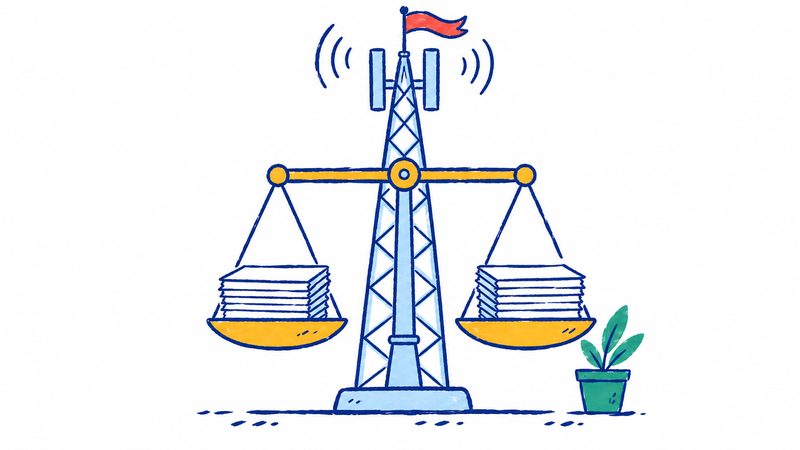
On 20 November CNIPA published draft Provisions on Administrative Adjudication and Mediation in Disputes Involving Standard-Essential Patents, with an explanatory note. The draft has 37 articles; comments can be sent by email until 4 January 2027, and no commencement date has been set. The rules would apply when local patent administration departments handle infringement disputes involving standard-essential patents (SEPs); administrative mediation could also cover licensing disputes, damages and royalties. CNIPA itself could handle cases of major nationwide impact, and besides patent holders, implementers of a standard could also file a request and submit evidence of non-infringement.
Once a case is accepted, mediation comes first. If an accused product uses the standard to which the patent corresponds, it is presumed to fall within the scope of protection, and the implementer may rebut this. Whether to order the infringement to stop depends on whether the patent holder has followed fair, reasonable and non-discriminatory (FRAND) principles and whether the implementer is clearly at fault: if the holder has followed FRAND and the implementer is clearly at fault, an immediate stop can be ordered; where the two are mixed, a conditional ruling such as negotiation within a time limit can be made; where the holder has not followed FRAND and the implementer is not clearly at fault, a request to stop implementing the standard will generally not be supported. Cases should in principle close within eight months of acceptance, extendable by up to two months with approval. Within three months of a mediation agreement on royalties, the parties must file the information needed to perform it with CNIPA; negotiation proposals, royalty calculations and sales and profit data are treated as confidential.
Impact assessment This is a consultation draft and its wording may change. Because the draft makes the parties' conduct in negotiations a factor in whether a stop order is made, patent holders and implementers negotiating SEP licences in China should keep a complete, dated record of correspondence, the basis of each offer, royalty calculations and FRAND commitments. Comments can be sent until 4 January 2027.
China's Supreme People's Court raises Tetra Pak's damages in two antitrust follow-on suits to RMB 492 million
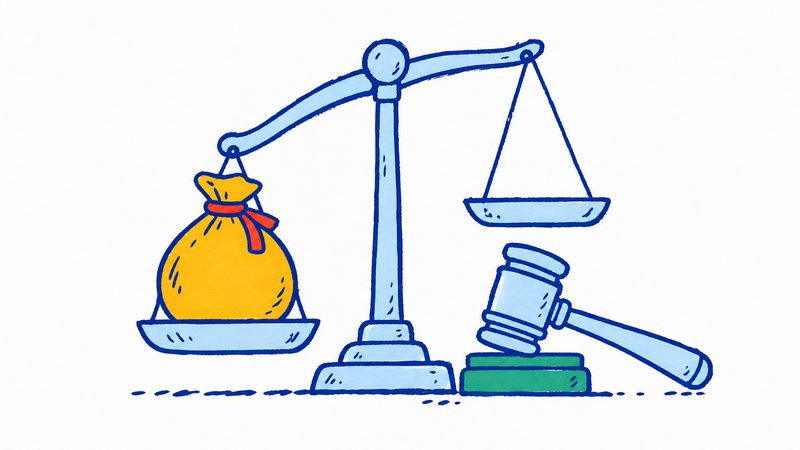
On 27 November the IP tribunal of the SPC delivered judgments in two suits brought against Tetra Pak entities by the Greatview parties and the Xinjufeng parties for abuse of a dominant market position, ordering Tetra Pak to pay RMB 466 million to Greatview and RMB 26.47 million to Xinjufeng, RMB 492 million in total. At first instance in December 2023, the Beijing High People's Court had awarded about RMB 40.43 million and RMB 1.69 million. Both are follow-on civil actions after antitrust enforcement, not IP infringement cases: in 2016 the former State Administration for Industry and Commerce found that from 2009 to 2013 Tetra Pak held a dominant position in mainland China's markets for aseptic packaging equipment, technical services and paper-based packaging materials for liquid food, and had engaged in tying, exclusive dealing and loyalty rebates, fining it about RMB 668 million.
The SPC held that where monopolistic conduct forecloses competitors through widespread locking-in of demand or supply, a claimant that proves it was a competitor in the relevant market during the conduct is presumed to have suffered harm; losses were calculated for the market as a whole using the market-share method. Because Tetra Pak did not submit evidence, as ordered, that it had stopped the conduct, the court found that the anticompetitive effects lasted at least until 2014 and used 2015 market shares as the counterfactual without the conduct. The SPC said the two cases carry the highest damages awarded so far in an antitrust civil case heard by Chinese courts.
Impact assessment Once an authority has found a monopoly, competitors can sue for damages on that basis, and courts may calculate losses for the market as a whole. Companies with high market shares in China whose contracts contain tying, exclusive dealing or loyalty rebate clauses should review them against antitrust rules; after a penalty, keep full evidence that the conduct has stopped. Tetra Pak's failure to submit such evidence led the court to find the effects lasted until 2014.
China's SPC IP tribunal: an app store that offers an accused app can be a patent defendant; inventive step is assessed with caution when only a few options exist

On 25 November the SPC IP tribunal published the key points of its second-instance ruling on a jurisdiction objection, (2025) Zui Gao Fa Zhi Min Xia Zhong 170. The claimant alleged that a software product infringed its invention patent for a publish/subscribe system and method for managing subscriptions, and also sued a phone maker that offered the app for download in its own app store. The court held that by offering the accused app for business purposes and earning revenue from downloads, the app store operator may have offered to sell and sold it within the meaning of Article 11 of the Patent Law; it had a formal connection to the alleged infringement that is arguable, so it is a proper defendant and its domicile can found jurisdiction. The ruling only concerns jurisdiction, not whether there was infringement.
On 26 November the tribunal published a ruling summary on inventive step when technical options are limited, from an invalidation case over a left atrial appendage occluder patent, (2023) Zui Gao Fa Zhi Xing Zhong 308: when, starting from the closest prior art, only a limited number of specific solutions are available to solve the actual technical problem, inventive step should be found with caution. A conventional choice consistent with technical common sense will generally lack inventive step; even a choice that is not will generally have inventive step only in special cases such as unexpected technical effects or overcoming a technical prejudice. On appeal the court set aside the first-instance judgment and CNIPA's decision upholding the patent, and CNIPA must decide again.
Impact assessment When enforcing software patents in China, consider also suing app store operators that offer the app and earn revenue from it; this also affects which court has jurisdiction. App store operators should watch the patent risks of the apps they list. When drafting an application whose distinguishing feature is one of only a few possible choices, set out in the description the unexpected technical effect or the prejudice it overcomes, and keep comparative test data.
An Australian parliamentary AI committee recommends that AI companies pay copyright holders; WIPO's first IP and AI forum discusses the human contribution to AI-assisted invention
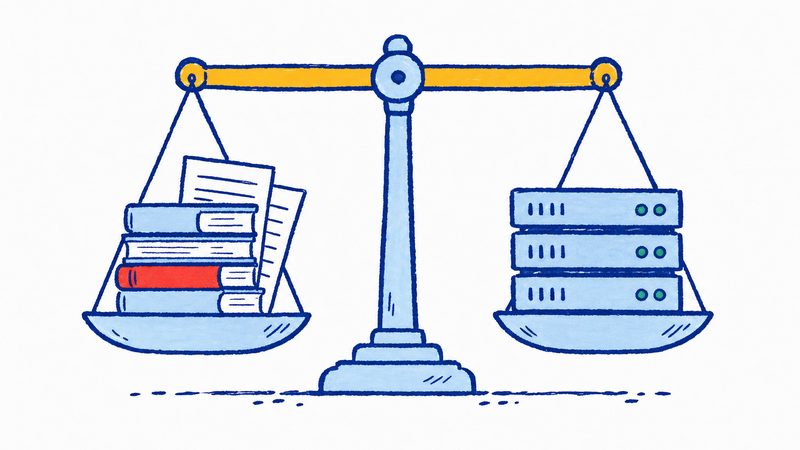
In November the Australian Parliament's Joint Select Committee on Artificial Intelligence published its report Artificial Intelligence – the Australian way, with 46 recommendations. These are recommendations to the government, not legislation, and whether they are adopted remains to be seen. Recommendations 31 to 38 concern copyright: a mechanism to make it easier and fairer for Australian rights holders and creators to be paid by AI companies that train frontier models and other large language models in Australia; tough penalties for breaches, including circumventing technological protection measures; transparency and accountability for the training data used by AI companies training models in Australia; and encouragement for commercial licences between rights holders, collecting societies and AI companies. The report also suggests considering a right for people to control how their face, voice and likeness are used (recommendation 19) and mandatory machine-readable labels on photos, videos and audio generated or substantially altered by AI (recommendation 18).
WIPO held its first Global Forum on Intellectual Property and Artificial Intelligence in Geneva on 9 and 10 November, where Director General Daren Tang called for new licensing and remuneration mechanisms; the forum discussed how people who invent with AI can record their own judgements and contributions. On 20 November the Japan Patent Office updated its survey of AI-related invention filings: in 2024 Japan received about 20,700 AI-related invention applications, about 2,900 of them core AI inventions (G06N); in the same year China received 146,618 core AI applications, more than seven times the 19,064 filed in the United States.
Impact assessment Companies that train or offer AI models in Australia should record licensing status by source of training data, ready for transparency requirements, and check consent and labelling for AI content involving people's faces or voices. Companies using AI in research should start recording which design choices and experimental adjustments were made by people, as a basis for inventorship questions in examination in different countries.
USPTO Patent Public Search requires a login from 4 December; INPI France requires two-factor login from 28 November; the UK IPO delays retiring its old patent web filing service to early January 2027
The USPTO announced on 23 November that from 4 December using Patent Public Search (PPUBS) will require a USPTO account and login; users with an account can sign in via MyUSPTO at the top right of the page, and the USPTO recommends that others register in advance. France's National Institute of Industrial Property (INPI) announced on 18 November that from 28 November logging in to the e-procédures portal through INPI Connect requires a one-time code in addition to the username and password; the code can be sent to the account's registered email address or generated with an authenticator app such as Microsoft Authenticator, Google Authenticator or FreeOTP, and FranceConnect+ can still be used.
The UK Intellectual Property Office (UKIPO) updated its notice on 26 November: the old patent Web Filing service, due to be retired in early December, will now be retired in early January 2027; about 5% of requests still come through it. The office is testing an emergency document upload service on a separate platform and will open it to all users if the results are satisfactory, then confirm the final retirement date. Filing patent forms, withdrawals and extension requests by email is unchanged for now; the patent forms mailbox is planned to stop accepting patent requests at some point in 2027.
Impact assessment Companies and researchers who search US patents regularly should register a USPTO account and test the login before 4 December. Applicants handling French trade mark or patent formalities themselves should make sure they receive email at the registered address or install an authenticator app. Anyone still filing UK patent requests through the old service should move to the new patent service soon and watch for the final retirement date.
Other developments
France's National Institute of Industrial Property (INPI), 20 November: the espadrille catalane receives the first favourable decision for a craft product geographical indication and goes to the EUIPO
INPI decided in favour of registering the espadrille catalane, made in the Haut-Vallespir area of the Pyrénées-Orientales, as a protected geographical indication; the national stage is over and the file has gone to the EU Intellectual Property Office (EUIPO). It is INPI's first favourable decision since EU rules allowed geographical indications for craft and industrial products from 1 December 2025; on 23 November INPI received a fourth application, for pierre de Bordeaux.
Brazil's National Institute of Industrial Property (INPI), 18 November: updated guidelines for examining AI-related patent applications presented; final text and effective date not yet published
At a stakeholder dialogue on 18 November, INPI's patent directorate presented its Guidelines for Examining AI-Related Patent Applications as updated after public consultation, and the criteria it applies to applications involving AI. INPI did not say when the guidelines will be issued or take effect; the recording and slides are on its permanent stakeholder dialogue page.
Brazil's National Institute of Industrial Property (INPI), 23 November: the delay in loading Madrid designation data since July has been resolved
Because of the update to the Vienna Classification of figurative elements, Madrid System designation data received by INPI since July 2026 was loaded late, and the BuscaWeb search system lagged behind. INPI says the problem is solved and data is gradually being restored, without saying when it will be complete; owners of marks designating Brazil since July whose designation could not be found can check again soon.
Practical considerations
01Negotiating SEP licences: keep a dated record of the negotiations
CNIPA's draft weighs whether the patent holder followed FRAND and whether the implementer is clearly at fault: keep correspondence, the basis of offers, royalty calculations and FRAND commitments complete; send any comments by 4 January 2027.
02Enforcing software patents: consider naming the app store operator as a defendant
The SPC held that an app store operator that offers an app and earns revenue from downloads can be sued and its domicile can found jurisdiction: decide defendants and the court together before filing.
03Where the distinguishing feature is one of a few choices, state the unexpected effect in the description
With limited technical options, inventive step is assessed strictly: when drafting, set out the resulting effect or the prejudice overcome and keep comparative test data for examination and invalidation.
04Register a USPTO account before 4 December and check that INPI France codes reach you
USPTO Patent Public Search needs a login from 4 December; France's e-procédures now uses two-factor login; anyone still using the old UK patent web filing service should switch to the new service soon.
Dates and next steps
4 December: USPTO Patent Public Search requires a login; early January 2027: target date for retiring the UK IPO's old patent Web Filing service, with the final date to be confirmed by the office.
4 January 2027: comments close on CNIPA's draft rules for SEP dispute adjudication and mediation; companies in SEP licensing talks should start organising negotiation records and FRAND material now.
Concrete tasks: file SEP negotiation correspondence and the basis of offers in date order; when planning software patent enforcement, assess app store operators as defendants; when drafting, add the effect of any distinguishing feature chosen from a few options and keep test data; if you train AI models in Australia, organise training data licences by source; register a USPTO account before 4 December; for marks designating Brazil under Madrid since July, check the designation details in BuscaWeb again soon.
Further reading
- Designating China Under Madrid: The 12- or 18-Month Refusal Period and Getting a CNIPA Registration Certificate
- Someone Holds a Chinese Design Patent on Your Product: Answering Marketplace Takedowns and Invalidating the Patent
- Trademark registration in France
- Trademark registration in Brazil
- France Issues First Decision on a Craft Product GI
- INPI Brazil Discusses AI Patent Examination Guidelines
- Brazil Fixes Delay in Madrid Designation Data
- WIPO: global patent filings reach 3.9 million in 2025, up 6%; China's CNIPA issues a 2026–2030 geographical indications plan; the Court of Appeal for Ontario dismisses OpenAI's appeal


