
JCIP Weekly Brief
JCIPWB2611#4 · 22 November 2026
Focus From 15 to 22 November: WIPO reports 3.9 million patent filings worldwide, CNIPA issues its geographical indications plan, OpenAI loses a Canadian appeal, Suno is sued and the USPTO returns IPR institution merits to the PTAB.
Compiled from the 8 news updates published in J&C Intellectual Property's news section from 15 to 22 November 2026, checked through 22 November.
This week at a glance
The World Intellectual Property Organization (WIPO) published World Intellectual Property Indicators 2026 on 18 November: patent applications worldwide reached about 3.9 million in 2025, up 6% and the fastest growth in nearly a decade; trade mark applications designated about 15.9 million classes, up 4.1%; and design applications fell 4.3% to about 1.5 million designs.
On 17 November the China National Intellectual Property Administration (CNIPA) published its 2026–2030 plan for geographical indications (GIs) and confirmed 29 demonstration zones. On 13 November the Court of Appeal for Ontario dismissed OpenAI's jurisdiction appeal; on 6 November rights holders in Elvis Presley and Eminem works sued Suno; and from 16 November the US Patent and Trademark Office (USPTO) returns merits-based IPR and PGR institution decisions to panels of the Patent Trial and Appeal Board (PTAB).
This week’s focus
Global patent filings reach 3.9 million in 2025, up 6%; trade mark classes up 4.1%; designs down 4.3%

WIPO published its World Intellectual Property Indicators 2026 report on 18 November (press release PR/2026/962): patent applications worldwide reached about 3.9 million in 2025, up 6% and the fastest growth in nearly a decade; trade mark applications designated about 15.9 million classes, up 4.1% and the first growth in recent years; and design applications fell 4.3% to about 1.5 million designs. By applicant residence, the top five for patents were China (1.9 million), the US (489,766), Japan (466,301), the Republic of Korea (319,210) and Germany (132,714); India grew 37.5% to 105,163, passing 100,000 for the first time. Asia's share of global patent filings rose from 61.9% in 2015 to 71.2%.
Of the growth in trade mark filings, applicants from India accounted for 17% and those from the US and China about 10% each. The fall in designs mainly reflects an 8.2% drop in China, which the report partly attributes to an ongoing policy shift there away from volume-driven filing. The report also notes that some IP offices say AI drafting tools may have influenced 2025 patent filings: the share of applications from individuals rose, and examiners increasingly see text that seems AI-generated or AI-assisted. WIPO considers that some of the increase may reflect new ways of using the patent system rather than additional investment in innovation. Under a new methodology, green technology patent applications reached about 613,000 in 2024, up 8.8%, with energy storage (batteries) accounting for 17.4%.
Impact assessment Indian patent filings have grown by double digits for seven straight years, and Indian applicants account for 17% of the global increase in trade mark filings; as local filings grow quickly, so does the chance of running into earlier applications, so businesses planning sales or production in India should search and file trade marks and patents early. Applicants who use AI tools to draft patent applications should have a professional check the claims and description item by item before filing, to confirm that the technical content is accurate and properly supported.
China's National Intellectual Property Administration issues its 2026–2030 geographical indications plan: direct output value of GI products expected to reach RMB 1.1 trillion by 2030, and 29 national GI protection demonstration zones confirmed

On 17 November CNIPA posted on its website the GI Protection and Utilisation Plan for the 15th Five-Year Plan period (issued under a notice dated 22 October), which expects the direct output value of GI products to reach RMB 1.1 trillion and the number of national GI protection demonstration zones to reach 160 by 2030. The same day CNIPA issued a notice (No. 137 [2026]) formally confirming 29 national GI protection demonstration zones. The list matches the one put out for public notice on 27 October and covers 22 provinces, municipalities and autonomous regions, with zones for products such as Chadian Muscat grapes, Xinyang Maojian tea, Zhenjiang vinegar, Liuzhou luosifen, Helan Mountains East wine and Aksu apples. The zones are managed dynamically, with zones both added and removed, and those that fall short lose their status.
On rules, the plan calls for faster research on dedicated GI legislation, revision of regulations such as the Measures for the Administration of the Use of the GI Special Mark (Trial) and, in due course, of the Measures for the Protection of Foreign GI Products, alignment of GI product protection requirements with the use rules for collective and certification marks, and a dedicated GI database. On supervision, it promotes "Internet + AI" supervision, monitoring of e-commerce for GI infringement leads and joint action by authorities where goods are produced and sold and where platforms are based. Abroad, it aims to guide Chinese GIs to obtain recognition in key countries and regions and to strengthen guidance on overseas disputes.
Impact assessment The plan makes e-commerce a monitoring and enforcement focus: online shops that use a GI name or the GI special mark in product titles or detail pages should first check that the use is authorised and that the goods come from the defined production area. Exporters of GI products should, in line with the target market's system, seek protection early through collective or certification marks or the local GI route.
The Court of Appeal for Ontario dismisses OpenAI's appeal: Canadian news organisations' copyright suit against OpenAI can proceed in Ontario

On 13 November the Court of Appeal for Ontario dismissed OpenAI's appeal (2026 ONCA 814); the three judges were unanimous. It upheld the Ontario Superior Court of Justice's order of 7 November 2025 that Ontario courts have jurisdiction over the suit brought by several Canadian news organisations against OpenAI. The plaintiffs, including Torstar, Postmedia, The Globe and Mail, the Canadian Press and the CBC, allege that OpenAI scraped their websites and reproduced and used their content to train the large language models behind ChatGPT, claiming breach of the Copyright Act, breach of contract (website terms of use) and unjust enrichment. The ruling concerns jurisdiction only; the court made no finding on whether OpenAI infringed.
The court found all three connecting factors for presumed jurisdiction made out: OpenAI carries on business in Ontario, the alleged copyright infringement is connected with Ontario, and the contract and unjust enrichment claims have a sufficient connection with Ontario; the lack of a physical office there did not prevent a finding of carrying on business. Whether the Copyright Act reaches conduct abroad and whether it displaces the contract and unjust enrichment claims are merits questions, to be raised separately in a motion to strike. The court held that the United States is not a clearly more appropriate forum. OpenAI must pay CAD 100,000 in costs of the appeal, an amount agreed between the parties.
Impact assessment Foreign AI companies with users and business in Canada may face Canadian jurisdiction even without a local office. As the plaintiffs here rely on website terms of use for a breach of contract claim, reviews of training data sources should check both the target market's copyright law and the terms of use of the scraped websites, and keep licence and source records.
Rights holders in Elvis and Eminem works sue Suno over 1,128 works, seeking statutory damages of up to USD 150,000 per work

On 6 November rights holders linked to Elvis Presley and the music publishers of Eminem's works filed separate suits against AI music platform Suno in the US District Court for the Northern District of California (Case Nos. 3:26-cv-13398 and 3:26-cv-13399), alleging that Suno copied their musical works without permission to train its AI models. Both cases are at the complaint stage and the court has made no findings. In the Elvis case the plaintiffs, including rights holders such as Elvis Presley Enterprises and Raleigh Music Publishing, cover 859 works. Besides copyright infringement, circumvention of technological protection measures and removal of copyright management information, they bring claims under Tennessee's ELVIS Act and the common-law right of publicity, alleging that Suno's outputs imitate Elvis's voice. On 13 November they filed an amended complaint with further output examples.
In the Eminem works case the plaintiffs are Eight Mile Style and Martin Affiliated, covering 269 works including "Lose Yourself" and "The Real Slim Shady", with claims for copyright infringement, circumvention of technological protection measures and removal of copyright management information; Eminem himself is not a plaintiff. Both suits seek statutory damages of up to USD 150,000 per work: for copyright alone, that comes to USD 128.85 million in the Elvis case and USD 40.35 million in the Eminem works case.
Impact assessment Anyone releasing AI-generated music commercially should first check how the platform's user terms allocate infringement liability, avoid outputs aimed at a particular singer's voice or specific works, and keep generation records and prompts where the music is used in advertising or as background music for short videos. As the Elvis case treats voice imitation as a right of publicity claim, content for the US market should be checked against the right of publicity rules of the states where it is sold.
USPTO: from 16 November PTAB panels decide IPR and PGR institution on the merits, and a petition is denied as a whole if a substantial majority of the challenged claims fall short
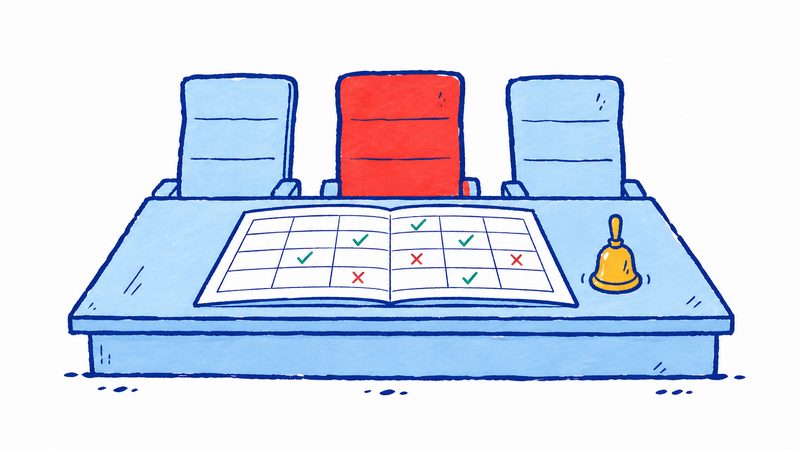
USPTO Director John A. Squires and General Counsel John F. Duffy issued a memorandum on 10 November: from 16 November, merits-based considerations in deciding whether to institute inter partes review (IPR) and post-grant review (PGR) return to three-member PTAB panels. The Director still first reviews non-merits considerations, such as discretionary factors, and may deny on that basis; petitions that pass are decided on the merits by a panel on the Director's behalf, and if a review is instituted a different panel conducts it. The new process applies to every IPR and PGR without a notice referring it for merits consideration by 16 November. It updates the memorandum of 17 October 2025, under which the Director himself made more than 325 institution decisions involving the merits over the past year.
Panels will apply these standards: the petitioner must show how the prior art discloses or renders obvious each limitation of each challenged claim, identifying the specific portions relied on, and pointing to an examiner's findings is not enough; if a substantial majority of the challenged claims fail to meet the institution standard, the whole petition is denied; and where the evidence on a claim is in equipoise, the petitioner is treated as not meeting the standard. The memorandum gives figures: in June 2025 about 60% of petitions were discretionarily denied, while in September 2026 discretionary denials fell to 15% and 85% were referred for merits review.
Impact assessment Businesses sued for patent infringement in the US and preparing an IPR or PGR should map each challenged claim, limitation by limitation, to the prior art with pinpoint citations, and focus the challenge on claims that can be argued convincingly, so that the petition is not denied as a whole because a substantial majority of claims fall short. Patent owners can use the preliminary response to argue that a substantial majority of the challenged claims do not meet the institution threshold.
Other developments
China's National Financial Regulatory Administration, CNIPA and the National Copyright Administration, 13 November: 16 model cases from the IP finance ecosystem pilots
The 16 cases published jointly by the National Financial Regulatory Administration (NFRA), CNIPA and the National Copyright Administration, posted on the CNIPA website on 13 November, cover IP-backed loans, insurance, trusts, securitisation and valuation standards. In Beijing, supported by 91 IP finance service points, outstanding IP-backed loans have passed RMB 10 billion since the pilot began; in Guangdong, five banks treat GIs as credit support, granting RMB 8 billion of group credit to over 500 users of 13 GIs; Ningbo has developed 29 IP insurance products covering 18,300 companies; and Shenzhen completed the first "double cross-border" IP securitisation, with an issue size of RMB 42 million. The cases also include an overseas IP infringement liability policy issued by the Yiwu branch of PICC Property and Casualty.
The European Patent Office, 17 November: joins WIPO's Global IP Assignment Platform (GIPAP), bringing the number of participating offices to 15
The European Patent Office (EPO) announced on 17 November that it is joining WIPO's Global IP Assignment Platform (GIPAP) initiative and will help develop a common technical solution; the USPTO joined the pilot on 22 September. GIPAP aims to let users prepare, submit and track assignment filings for several offices in one place, whereas transferring patents across borders still means recording the change separately at each office. With the EPO, 15 offices take part, four of them (Australia, the EU, France and Singapore) as observers; as of 19 November, CNIPA is not among the 15 listed on WIPO's page. The EPO says it will present the common technical solution at the IP5 annual meeting in June 2027.
The UK government, 4 November: its designs consultation response gives the registrar power to search and examine novelty, targeting people who register others' designs
The UK government published its response to the consultation on the designs framework on 4 November: legislation will give the designs registrar power to search and examine a proportion of applications for novelty and individual character, targeting "anti-competitive" filings by people registering designs that are not theirs. UK registered designs are not currently examined for novelty, and problems can only be dealt with by invalidation after registration. Other changes include extending the statutory deferment period to 30 months, making clear that designs with animation or transitions can be registered, and exploring bringing simple, lower-value registered design claims into the small claims track of the Intellectual Property Enterprise Court (IPEC). Most changes are to be legislated "when parliamentary time allows", with no timetable, so the current rules stay for now.
Practical considerations
01Have a professional check AI-drafted patent applications before filing
The WIPO report notes that examiners increasingly see application text that appears AI-generated: check the technical content, terminology and support in the claims and description item by item, so that document quality does not cause problems in examination.
02Online shops using a GI name: check authorisation and the production area first
The plan makes e-commerce a focus of GI infringement monitoring: where product titles or detail pages use a GI name or the GI special mark, confirm the use is authorised and the goods come from the defined area; for exports, seek protection in target markets early.
03Training AI models or using AI outputs commercially: check data sources and platform terms
Review training data sources against the target market's copyright law and the scraped websites' terms of use, and keep licence and source records; before using AI-generated music commercially, check how platform terms allocate infringement liability and avoid aiming at a particular singer's voice or specific works.
04Preparing a US IPR or PGR: map each claim limitation to the prior art
From 16 November PTAB panels decide institution on the merits: cite the prior-art source for each limitation of each challenged claim, and focus on claims that can be argued convincingly, since a petition is denied as a whole if a substantial majority of claims fall short.
Dates and next steps
From 16 November: PTAB panels make merits-based institution decisions on IPR and PGR at the USPTO; 1 January 2027: China's revised Trademark Law takes effect, and unused registered marks can be cancelled ex officio.
5–13 February 2027: China's Chinese New Year public holiday; check how trade mark and patent deadlines that expire during the holiday are handled; June 2027: the EPO plans to present the GIPAP common technical solution at the IP5 annual meeting; 2030: national GI protection demonstration zones expected to reach 160.
Concrete steps: patent applications drafted with AI tools can be reviewed by a professional before filing; online shops can check their entitlement to use GI names and the GI special mark; businesses with AI operations in Canada or the US can organise licence and source records for training data; those preparing an IPR or PGR in the US can recheck their claim charts against the new standards; materials for trade mark and patent deadlines falling around Chinese New Year can be submitted by 4 February 2027; and before the new Trademark Law takes effect, registered marks unused for three years or more can be reviewed.
Further reading
- Your China Trademark Faces an Invalidation Request: Deadlines, Defences and Evidence
- Trademark registration in India
- China IP Finance: 16 Model Cases Published
- EPO Joins WIPO's GIPAP Assignment Platform
- UK Designs Reform: Registrar to Examine Novelty
- Colombia's Madrid fee rises about 38% from 2027; a Shenzhen company's bum bag design survives a UK challenge; the UPC refuses Ericsson an injunction against ASUS


