
JCIP Weekly Brief
JCIPWB2610#3 · 12 October 2026
Focus This issue covers the Madrid Protocol's entry into force for Saudi Arabia, El Salvador's accession to the Hague System alongside two procedural treaties, trade mark and personality protection for voices in the age of AI cloning, a US newspaper group's lawsuit against OpenAI and the Copyright Office's inquiry into streaming fraud, and the limits on using other parties' names in trade names, product names and union branding.
Compiled from the 15 news updates published in JCIPO's news section since 6 October 2026, checked through 11 October.
Half of this week's changes are about where you can file, and half are about what can be protected: the Madrid and Hague maps are growing, and the boundaries around voices, news content and names are being redrawn.
The international filing systems grew in two places. The Madrid Protocol entered into force for Saudi Arabia on 8 October, so Saudi Arabia can now be designated in new international applications and subsequent designations, subject to an 18-month refusal period and individual fees charged per class. El Salvador joined the Hague System on 7 October, bringing it to 100 countries, and the Singapore Treaty on the Law of Trademarks and the Patent Law Treaty entered into force for it on the same day.
The debate over what can be protected centred on voice and identity. Italy's Prime Minister Giorgia Meloni filed a sound mark with the EUIPO, the Tokyo District Court recognised in a voice actor's AI cloning case that a voice can be protected by the right of publicity, and an advert that uses AI to bring back a late film star raised the question of which permissions are needed. All three point to the same reality: once a voice can be copied cheaply, rights holders start to rely on trade marks, personality rights and contracts at the same time.
Two US copyright developments and three disputes over names are worth reading together. A newspaper group suing OpenAI has built its case around the licensing market and substitution, while the Copyright Office has opened a consultation on streaming fraud that dilutes royalty pools. In China, the Supreme People's Court reaffirmed that registering a trade name similar to another party's well-known mark can be unfair competition, and the US Astra and Starbucks union cases are also about who may use a name and for what.
This week’s focus
Madrid Protocol in force for Saudi Arabia from 8 October: new applications and subsequent designations can now cover Saudi Arabia, with an 18-month refusal period

According to the depositary notification issued by the World Intellectual Property Organization (WIPO), Saudi Arabia deposited its instrument of accession to the Protocol Relating to the Madrid Agreement Concerning the International Registration of Marks on 8 July 2026, and the Protocol entered into force for it on 8 October. Trade mark holders in other Madrid members can now designate Saudi Arabia in new international applications or extend existing international registrations to it through subsequent designation, while Saudi applicants can use a national basic application or registration to seek protection in other members through the Madrid System.
Saudi Arabia made two declarations in its instrument of accession. First, it extended the time limit for notifying refusals to 18 months, and refusals that may result from an opposition can be notified after that period. Second, it will charge individual fees rather than share in supplementary and complementary fees; the amounts were published in WIPO Information Notice No. 37/2026 and are charged per class.
Designating Saudi Arabia through Madrid does not mean automatic protection: the Saudi IP office will still examine designations under national law, and until the 18-month refusal period has run a designation can still be refused following examination or opposition.
Impact assessment Businesses planning to protect marks in Saudi Arabia can now add it to new international applications or record a subsequent designation for existing registrations. Search for earlier Saudi marks first, check the goods and services wording against local examination practice and budget the individual fee per class; have a local representative follow up any provisional refusal or opposition, and do not treat protection as final until the 18-month refusal period has expired.
El Salvador joins the Hague System, taking it to 100 countries, as the Singapore Treaty and the Patent Law Treaty enter into force the same day

From 7 October 2026 El Salvador is formally part of the Hague System for the international registration of industrial designs, as the Geneva Act of the Hague Agreement enters into force for the country; on the same day the Singapore Treaty on the Law of Trademarks and the Patent Law Treaty also enter into force for El Salvador. The Government of El Salvador deposited its instruments of accession to all three with WIPO on 7 July 2026.
According to WIPO, El Salvador is the 77th Contracting Party to the Geneva Act and the 83rd member of the Hague Union, and its accession brings the Hague System to 100 countries. Designers and businesses in El Salvador can now seek design protection in those 100 countries through a single international application, and applicants entitled to use the Hague System can designate El Salvador; El Salvador's national laws, procedures and requirements relating to the Hague System will be published in the Hague member profiles.
The Singapore Treaty and the Patent Law Treaty harmonise and simplify procedures for filing and maintaining trade marks and patents, including by facilitating electronic communication and simplifying formal requirements. According to an article by local lawyers, El Salvador's Legislative Assembly approved accession to these treaties in 2026 to meet commitments under the country's trade agreement with the United States.
Impact assessment Businesses planning to enter El Salvador and Central America can consider designating El Salvador in new international design applications, checking WIPO's forthcoming member profile for examination procedures and declarations before filing. Holders of existing local marks and patents should watch for procedural changes under the two treaties, such as e-filing, relief for missed time limits and formal requirements, and confirm renewal and response arrangements with local representatives where needed.
Voices become a protectable marker of identity: Meloni files a sound mark and a Tokyo court recognises voice under the right of publicity
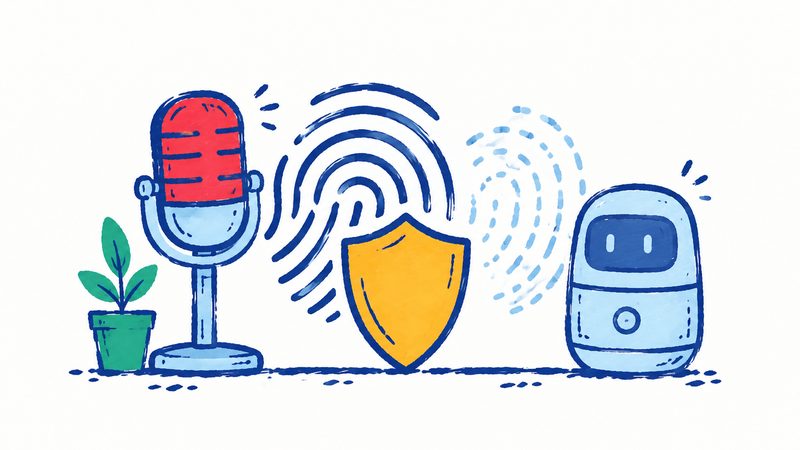
According to Italian and international media reports, Italian Prime Minister Giorgia Meloni has filed a sound trade mark application with the European Union Intellectual Property Office (EUIPO), consisting of a recording of about 4 seconds in which she says twice, in Italian, Io sono Giorgia Meloni. The reports cite EUIPO records giving 5 October as the application date; the application is under examination and has not been registered, covers services including downloadable multimedia content, cultural activities and the organisation of political events, and is intended to counter AI voice cloning and deepfakes. Trade mark protection would be limited to the sound sign applied for and the listed services, not a monopoly over a person's whole voice or way of speaking, and registration still depends on examination of distinctiveness and other requirements.
On 30 September the Tokyo District Court ruled in voice actor Kenjiro Tsuda's case against the operator of TikTok that a person's voice can be protected by the right of publicity: unauthorised use may infringe where the voice has commercial appeal and the use aims exclusively at exploiting that appeal. The court nevertheless dismissed all of the claims, because the account had been deleted in May and there were no videos left to remove, and it did not decide whether the AI voice resembled the claimant's, so the case cannot be summarised as a win for the claimant.
The same theme appeared in advertising and policy. Swedish manufacturer SKF used AI to bring back the late film star Greta Garbo for an advert, developed with her family, with the voice trained on licensed sound from one of her early films; a deputy minister in Ghana said at an event that creators' likeness, voice and identity need stronger protection in the age of AI, though this was a policy statement rather than new law. In China, the Supreme People's Court's September opinion on AI-related disputes states that where AI is used without authorisation to create or use a digital likeness of a deceased person and infringes that person's name, portrait or reputation, close relatives may claim civil liability.
Impact assessment Before using an AI voice or digital likeness resembling a particular voice actor, presenter or late celebrity, obtain written authorisation and agree the scope, platforms and term separately for the person's identity features and for any existing audio or film material. Public figures worried about cloning can treat a sound mark as a complementary tool, not comprehensive protection, and should preserve evidence of accounts, videos and earnings as soon as suspected clones appear.
Newspaper group sues OpenAI for more than USD 250 million as the US Copyright Office seeks comments on music streaming fraud
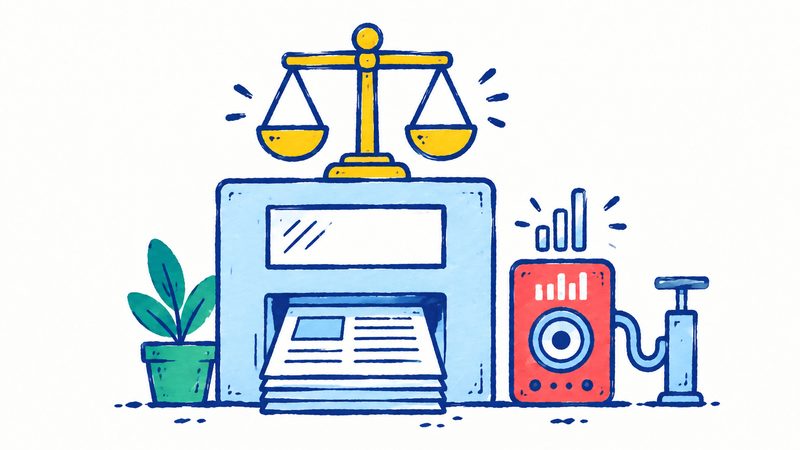
USA TODAY Co., formerly Gannett, and 13 affiliated newspaper companies sued the OpenAI Foundation and six other OpenAI entities in the US District Court for the Southern District of New York on 8 October (case no. 1:26-cv-08892), alleging that OpenAI used news content from 19 of their publications without permission to train its GPT models and that ChatGPT outputs copy or rework their reporting. They seek more than USD 250 million in damages, a permanent injunction and, under section 503(b) of the US Copyright Act, the destruction of models and training datasets containing their content. The case is at the complaint stage, and its allegations are the plaintiffs' claims.
The complaint concentrates on the market for licensing news content. It lists content licences OpenAI has signed with more than ten news organisations, including the Associated Press and Axel Springer, says the plaintiffs' own licensing business has been harmed, and cites internal OpenAI documents describing its products as largely a substitute for news. If OpenAI raises fair use, these facts go to the fourth factor: the effect of the use on the potential market for the works.
On 7 October the US Copyright Office published a notice of inquiry in the Federal Register on music streaming fraud, seeking comments on bots, click farms, playlist stuffing and account hijacking that dilute royalty pools; written comments are due by 23 November and reply comments by 21 December. In the same week the US District Court for the Central District of California dismissed a copyright suit over the Avatar sequels, finding that the alleged similarities came either from earlier script drafts and the first film or were unprotected ideas; the claimant has said he will appeal.
Impact assessment Content owners who may assert copyright in the US should register their works promptly: all the works listed by the plaintiffs here carry US registrations, and statutory damages and attorney's fees generally depend on timely registration. Put content licences in writing and keep records of fees received. Record labels, distributors and songwriters can draw on their data on abnormal streams and recovered royalties to file comments by 23 November.
China's Supreme Court reaffirms the Liu Fu trade-name rule as the OpenAI Astra and Starbucks union cases test the limits of name use

In the retrial of the Liu Fu trade mark and trade name dispute (case no. (2026) Zui Gao Fa Min Zai 51), China's Supreme People's Court reaffirmed that a trader who knows of another party's earlier-registered, well-known mark and still registers and uses a similar sign as its enterprise trade name may commit unfair competition if confusion is likely, even where the full company name is used in a formally proper way. A jewellery company had registered Jin Liu Fu Shang Mei as its trade name; on retrial the court set aside the second-instance judgment and upheld the first-instance one. The case was one of the Court's model unfair competition cases published in September, and the recent commentary restates an existing rule rather than reporting a new judgment.
US software company TradeSun sued OpenAI in the US District Court for the Northern District of California on 5 October, saying it has sold software under the Astra name since 2021 and that OpenAI's AI model of the same name will cause confusion. The complaint relies on reverse confusion, where a larger later user's reach leads the public to see the earlier user as the imitator. OpenAI has said the suit has no merit, and the court has made no findings.
On 2 October a federal judge in Pennsylvania denied Starbucks' motion to dismiss a lawsuit by the union Workers United, which can continue to seek a declaration that its use of the name Starbucks Workers United and an adapted logo featuring a raised fist does not infringe Starbucks' marks. This is a procedural step; the court has not decided whether those uses are lawful.
Editorial perspective The three cases point in different directions, but they share one question: who is using a name or logo, and for what. Before settling a trade name, product name or new feature name, search earlier registered marks, well-known trade names and unregistered prior use together. Smaller prior users should keep evidence of continuous use and apply to register early. Where unions or distributors use a company's name, distinguish descriptive use to identify themselves from adapted logos and merchandising, and set rules for each.
Other developments
Dutch court bars manufacture and sale of subcutaneous Keytruda in eight European countries
On 7 October the specialised patent court in The Hague found that Merck infringes Halozyme's European patent EP 2,797,622 and rejected the invalidity claim, ordering Merck's central European marketing authorisation holder to stop making and selling the subcutaneous form of Keytruda in Belgium, Denmark, France, Ireland, Italy, Sweden, Switzerland and the Netherlands. The intravenous form is not covered by the injunction, and Merck has said it will seek to overturn the ruling. The Munich Regional Court granted a preliminary injunction on the same patent in December 2025. For reformulated products, third-party patents on excipients, delivery technology and formulation processes can be as much of a barrier to launch as patents on the drug itself.
Indonesia hosts a global dialogue on cross-border copyright royalties
Indonesia's Directorate General of Intellectual Property hosted a global dialogue in Bali on governing cross-border copyright royalties in the digital age, stressing that royalties go unpaid mainly because data are incomplete or conflicting, and listing algorithmic accountability in digital remuneration as a separate agenda item. Indonesia plans to take a proposal for global common reference parameters to WIPO's Standing Committee on Copyright and Related Rights. This is a voluntary, non-normative discussion, not an international rule. Rights holders distributing works on overseas platforms should check that identifiers, rights holder details and contract records are complete and consistent.
Nigerian lawyer criticises the trade mark registration backlog
A Nigerian legal magazine published a lawyer's commentary on 9 October saying that official guidance envisages registration in about 12 to 18 months, while local practitioners report that applications filed in 2019 may still be awaiting journal publication; the author calls for end-to-end digitisation and accession to the Madrid Protocol. This is commentary, not official data. Nigeria has not joined the Madrid Protocol, so foreign businesses still need national applications there and should allow considerably more time for registration.
Practical considerations
01Search, budget and diarise before designating Saudi Arabia
Before adding Saudi Arabia to a new international application or a subsequent designation, search earlier Saudi marks, check the goods and services wording against local examination practice and budget the individual fee per class. Put the 18-month refusal period in the case calendar, do not treat Saudi protection as secured before then, and instruct a local representative to follow up provisional refusals and oppositions.
02License AI voices and digital likenesses in separate parts
A person's name, appearance and voice are one set of permissions; old photographs, films and recordings are another. Contracts should state the scope, platforms, term and whether AI generation is allowed, and an AI-generated label does not replace authorisation. Rights holders who find a suspected clone should preserve evidence of the account, videos and earnings early.
03Have registrations and licence records ready before asserting copyright in the US
Register important works in the US promptly to keep statutory damages and attorney's fees available. License content in writing and keep fee records, which may become evidence on the market-effect factor of fair use. Music rights holders can gather data on abnormal streams and recovered royalties and take part in the Copyright Office consultation, which closes on 23 November.
04Clearance for names and trade names must cover prior use
Before choosing a trade name, product name or AI feature name, search beyond registered marks to well-known trade names, unregistered prior use, domain names and app stores. Where a trade name already in use may be similar to another party's well-known mark, using the full company name properly is not a reason to keep it; consider a change promptly and keep records of the searches and decisions.
Closing perspective
There are more places to file and more things worth protecting.
Both trends require businesses to decide earlier which right to rely on, where, and with what evidence.
This week's updates fall into two groups. One is procedural expansion: Saudi Arabia has joined the Madrid System, and El Salvador has joined the Hague System and accepted two procedural treaties, giving international filers more destinations and more fees and time limits to work out in advance. The other is the extension of what is protected: voices, digital likenesses, news content and names are having their boundaries redrawn through trade mark, personality, copyright and unfair competition rules.
For in-house IP teams this translates into a few concrete tasks: add Saudi Arabia and El Salvador to the checklist for international filings, build contract templates that license AI voices and likenesses item by item, register important content in the US, and complete a search that covers prior use before every naming decision and trade name registration. Doing this work early is worth more than repairing gaps after a refusal, a lawsuit or a platform complaint.
Further reading
- How Madrid Trademark Fees Are Calculated: China and Saudi Arabia Examples (2026)
- Sound Marks in China and AI Voice Cloning: What Brand Owners Can Protect
- When a Bigger Company Uses Your Brand Name in China: Prior Use and Reverse Confusion
- Trademark registration in Saudi Arabia
- EU trademark registration
- USA TODAY Group and Its Newspapers Sue OpenAI for More Than USD 250 Million, Focusing on the News Licensing Market and Substitution
- China's Supreme Court Reaffirms the “Liu Fu” Rule: A Trade Name Mimicking a Well-Known Mark Can Be Unfair Competition Even If the Full Company Name Is Used Properly
- China's layout-design rules take effect as Madrid payments and EPO e-filing change


