


JCIP Weekly Brief
Issue: JCIPWB2610#1
This issue covers how China's new Trademark Law treats unused registrations and warehoused filings, the Madrid fee changes for Saudi Arabia, Israel and Canada, the AI tools and RCE trend on the USPTO's examination side, the copyright boundary of AI-generated content, and the evidence route to well-known-mark protection in India.

Compiled from the 47 updates published in JCIPO's news section since 20 September 2026, checked through 30 September.
The week in perspective
Every major change in this period lands on something companies already hold: registered marks that are not in use, Madrid designations already made, patent applications already pending in the United States, and content already produced with AI.
In China, the Trademark Law that enters into force on 1 January 2027 turns non-use from a weapon in a competitor's hands into a clean-up procedure the trademark authority can start on its own, and attaches a fine to filings that clearly exceed genuine business needs. Companies holding large defensive portfolios have just enough time left for a full portfolio review and a proper evidence-of-use file.
The Madrid System's fee side moved three times within a month: Saudi Arabia, a new member, applies an individual fee of CHF 1,397 per class from 8 October; Israel raises its fees from 17 October; Canada adjusts from 1 January 2027. All three notices share the same mechanics: the applicable date is the day the Office of origin receives the application or the renewal is processed, and WIPO's summary web page lags behind the notices themselves.
The US change is not in the rulebook but in how examiners read applications: AI summaries and similarity search are now routine, PTAB experience is being fed back to examiners systematically, and final rejections and RCEs are rising together. In parallel, a US and a Chinese decision on AI-generated content narrow the dispute, from two different angles, to one question: what did a human actually control during generation, and what records are left of it.
This week’s focus
This week’s focus
Five developments shape this week’s brief, led by the first and third items.
01 China | Trademark law | Entry into force
Under the new Trademark Law, unused registrations can be cancelled by the authority on its own initiative

The revised Trademark Law adopted on 26 June 2026 applies from 1 January 2027. Article 57 keeps the rule that any entity or individual may request cancellation of a registered mark not used for three consecutive years without justification, and adds that the trademark authority under the State Council itself may cancel such a mark. From next year, an unused registration no longer simply waits for a competitor's non-use action; the authority can open the clean-up itself.
On warehousing, Article 19 provides that applications filed without an intention to use and clearly exceeding normal business needs shall not be registered, and Article 54 adds that an applicant who files in breach of Article 19 receives a warning from the enforcement authority and may be fined up to RMB 100,000. Bulk filing now carries a penalty risk, which is materially different from the former consequences of refusal or invalidation.
For companies holding large defensive or reserve portfolios, the practical question is not how the provisions will be interpreted but whether three years of use evidence can be produced mark by mark, product by product. That evidence is usually scattered across sales contracts, invoices, packaging, advertising records and platform data held by different departments, and it rarely comes together in time once a cancellation is already under way.
02 Madrid System | Official fees | Saudi Arabia, Israel, Canada
Madrid fee changes converge: Saudi Arabia at CHF 1,397 per class from 8 October, Israel and Canada raise their fees next
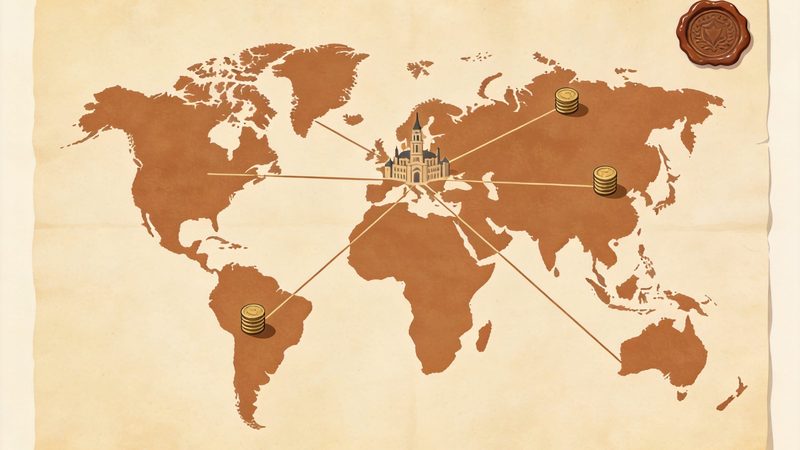
WIPO Information Notice No. 37/2026 published Saudi Arabia's individual fee declaration: international applications or subsequent designations naming Saudi Arabia pay CHF 1,397 per class of goods or services, CHF 1,719 per class for collective or certification marks; renewal costs CHF 1,397 per class, or CHF 1,612 per class within the grace period. The declaration takes effect on 8 October 2026, the same day the Madrid Protocol enters into force for Saudi Arabia, which has already extended its refusal period to 18 months and does not accept division requests based on international registrations.
Israel and Canada are increases. Under Notice No. 39/2026, the first class for Israel rises from CHF 471 to CHF 503 and each additional class from CHF 354 to CHF 378, with renewal for the first class up from CHF 840 to CHF 896, applicable from 17 October. Under Notice No. 41/2026, Canada's first class goes from CHF 282 to CHF 291 and each additional class from CHF 86 to CHF 88, with renewal for the first class up from CHF 342 to CHF 353, applicable from 1 January 2027; current amounts apply until 31 December 2026.
Two practical details are common to all three notices. First, whether the new fee applies depends on the date the Office of origin receives the international application, the date the subsequent designation is filed or the date the renewal is processed, not the date an applicant instructs its agent. Second, at the time of reporting WIPO's individual fee summary page still showed an update date of 23 August and did not yet reflect the Israeli or Canadian notices, so quotes should be based on the notice texts and the fee calculator on the day of filing.
A procedural notice from the same period belongs in agents' deadline tables as well: Cuba has withdrawn two earlier notifications under Rule 40, so that for provisional refusals issued on or after 8 August 2026 the reply period is 60 calendar days from the date WIPO transmits the notification, and international registrations resulting from division may now be merged again.
03 United States | Patent examination | AI and RCEs
Three shifts on the USPTO's examination side: AI at scale, PTAB experience fed back to examiners, and an RCE backlog that doubled in a year

On 22 September the USPTO appointed Jonathan Spencer as Chief Artificial Intelligence Officer to coordinate AI and emerging-technology matters across the Office. The next day its Chief Information Officer said publicly that more than twenty AI capabilities are already live: the enterprise large-language-model tool Scout has over 7,000 daily and weekly users, an AI plug-in has summarised more than 100,000 applications for examiners, the trademark operation adopted Scout across the board on 1 July, and AI approaches to drafting Office actions and finding trademark evidence are under dedicated study. The USPTO keeps stressing examiner-led, AI-assisted work, but the way examiners first see an application has already changed.
The same week, the Director's relaunched blog described the Learning from Outcomes to Optimize Patents project: the Office reviewed about 150 post-grant proceedings and invested roughly 4,200 hours of live training to feed PTAB judges' experience and search errors exposed in invalidity petitions back to examiners. A companion pilot lets PTAB administrative patent judges join pre-appeal brief review conferences in Technology Center 1700; the judge acts only as an adviser, and an examiner's withdrawal of a rejection on that basis is not a PTAB decision and does not trigger patent term adjustment.
The data shows where the pressure has moved. According to the USPTO dashboard through August 2026, RCE filings in the first eleven months of fiscal year 2026 reached 143,060, about 14% more than the same period a year earlier; the inventory of RCEs awaiting a first action rose from 14,613 to 30,520, more than doubling in a year; cumulative final rejections grew about 12%, and total pendency including RCEs lengthened from 30.8 to 33.7 months. Commentators attribute this to more final rejections and the end of the free AFCP 2.0 pilot in December 2024. The fee for a first RCE is now USD 1,500 and USD 2,860 for the second and later ones.
04 AI-generated content | Copyright | United States and China
The rights boundary of AI output: missing attribution is not a DMCA violation, and generic prompts do not make a work
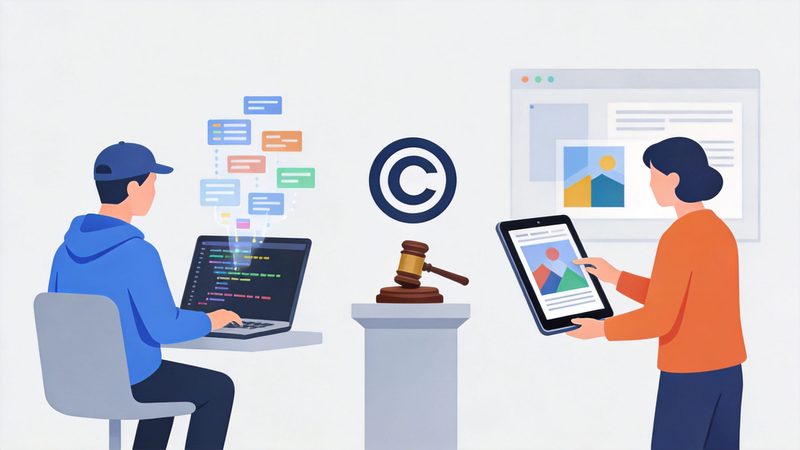
On 16 September the US Court of Appeals for the Ninth Circuit issued a precedential decision in Doe v. GitHub, affirming the dismissal of the DMCA copyright-management-information claim. On the complaint's own description of how Copilot and Codex work, the court treated the output as newly generated work that never carried CMI, so similarity to the original code and missing attribution alone do not show that the defendants removed or altered CMI from an existing copy. Three doors remain open: the theory of liability at the training-input stage was not preserved below and was not decided, two contract claims continue, and the court did not rule on whether the output infringes copyright in the traditional sense.
In China, a judgment of the Kaifu District People's Court in Changsha that has already taken effect drew concentrated professional discussion in late September. The court examined originality layer by layer across front-end conception, control of generation and post-processing: the prompt contained only general requirements as to subject, colour and style, made no individual choices about shape, composition, arrangement of elements or lighting, and removing repeated characters in Photoshop afterwards was a technical correction, so the image was not a work. The judge added that users hoping for protection should keep records of prompts, parameter adjustments, selection and editing.
The two decisions differ in jurisdiction and cause of action but point to one test: whether rights can be claimed in AI output, and whether someone else's use carries liability, turns on the demonstrable human control exercised during generation and the records left behind, not on the tool, the degree of similarity or a registration certificate. That is consistent with the Beijing Internet Court's 2023 finding of protection for an AI image produced through many rounds of prompts and parameter changes.
05 India | Well-known marks | Opposition and cancellation
Delhi High Court in ZARA v. ZORA: cross-class protection for a well-known mark does not require a prior Rule 124 listing

A judgment of Justice Jyoti Singh of the Delhi High Court dated 6 July 2026 in ZARA v. ZORA came back into professional focus from 26 September. The court held that when a proprietor invokes cross-class protection under Section 11(2) of the Trade Marks Act 1999, the Act does not require a prior formal determination of well-known status under Rule 124; the earlier proprietor need only prove, on the factors in Sections 11(6) and 11(7), that the mark is well known in India, and the court or the Registrar may decide the point in the case at hand. The legislature's use of "well known" in Section 11(2) and "determined to be well known" in Section 11(8) was a deliberate distinction.
The court also criticised the Registrar for splitting ZARA and ZORA into prefixes for comparison, contrary to the anti-dissection rule; viewed as wholes the marks are similar in sound, appearance and structure, and Section 11(2) is concerned with dilution of and detriment to the earlier mark's distinctiveness and reputation rather than the confusion test of Section 11(1). The court set aside the Registrar's rejection of the opposition, cancelled the ZORA registration in Class 24 and directed its removal from the register within two months.
Commentators note that case-by-case findings running alongside the Rule 124 list may produce a dual track, in which marks that litigate actively obtain reusable precedent while the well-known status of others stays uncertain. For foreign brands operating in India, the practical meaning is that well-known protection rests on the evidence itself.
Other developments
Other developments
European patent procedure: the Swiss transition window closes, the EPO's current PACE rules, and Austria's e-filing upgrade
Switzerland's partially revised Patent Act enters into force on 1 January 2027: all Swiss national applications will in principle receive a fee-based prior-art search with a search report (CHF 500, with full examination for a further CHF 300), the number of claims covered by the filing fee rises from ten to fifteen, and technical documents may be filed and published in English. Requests to have pending applications invoiced early so they finish under the current law closed on 30 September; pending applications whose examination fee is not paid before the new law takes effect move to the new regime automatically and receive a chargeable search. The EPO's revised PACE programme has applied since 1 February 2026: examination stage only, requests on the dedicated online form, in principle one request per application, and an application that asks for an extension, withdraws the request or is refused or withdrawn leaves PACE for good, while unpaid renewal fees suspend acceleration. On 24 September the Austrian Patent Office upgraded its online filing platform with a shared address book, single-step upload of subsequent documents and combined signing and sending, which calls for adjustments to permissions and pre-dispatch checks within agencies.
Trademark filing practice: Mexico merges its application forms, the UAE opens Class 33, Singapore fixes the date for the new Nice edition
On 28 September the Mexican Institute of Industrial Property published an administrative simplification agreement in the Official Gazette: traditional marks, collective and certification marks, slogans and trade-name publications merge into a single IMPI-01-001 application, while holograms, sounds, scents, trade dress and other non-traditional signs merge into IMPI-01-002; information formerly filed as separate documents, such as power-of-attorney registration numbers, applicant details, domicile, service address and priority claims, is now carried on the unified form. The agreement applies from the business day after publication, and filings remain physical until the digital window is operational. In the UAE, several firms report that the Trademark Office now accepts applications for alcoholic beverages in Class 33, with beer in Class 32 also accepted; this is an examination-practice change rather than a legislative one, and registration does not amount to an import, distribution or sales licence. Singapore's IPOS confirmed in Circular No. 4/2026 that the Nice Classification 13th edition, 2027 version, applies from 1 January 2027, that earlier applications will not be reclassified and that the filing date determines the applicable edition.
Two guiding cases from China's Supreme People's Court and the patent measures in Hong Kong's Policy Address
Two patent invalidation cases from the list of guiding cases published by the Supreme People's Court's IP Court in January attracted attention in September. In (2022) Zui Gao Fa Zhi Xing Zhong No. 870 the court held that when the panel at an oral hearing finds some amended claims unacceptable, the patentee must be allowed to delete those claims orally or in writing and continue on the remaining text, with a deadline for filing replacement pages where none were submitted at the hearing. In No. 255 the court held that whether an earlier foreign filing breached the confidentiality examination rule depends on where the substantive content of the technical solution in the foreign filing was completed, assessed on the development history, the inventors' location and the research pattern of the field rather than on the patentee's nationality or a project's name. Hong Kong's Policy Address of 16 September announced a continued expansion of the original grant patent examination team with a facilitation pilot in 2027, a public consultation in 2026 on a registration system for patent agent services and legislative proposals in 2027.
Practical considerations
Practical considerations
01
Audit use evidence for the Chinese trademark portfolio before 2027
Assemble sales contracts, invoices, packaging, advertising and platform records for the last three years mark by mark and class by class, and mark which registrations can show use and which are only reserves. Decide before renewal which unused marks to let go, keep future bulk filings within genuine business needs, and avoid facing ex officio cancellation and a fine at the same time under the new law.
02
From October, check Madrid designation fees against the notices and the fee calculator
The three effective dates, 8 October for Saudi Arabia, 17 October for Israel and 1 January 2027 for Canada, all turn on the date the Office of origin receives the application or the renewal is processed. Before quoting or paying, read the notice text and run the fee calculator on the day of filing rather than relying on WIPO's summary page, and bring forward subsequent designations and renewals that can still be completed at the old rates.
03
Verify any official-sounding fee or opposition notice before acting
IP Australia is running a site-wide scam banner and Canada's agent regulator CPATA updated its alert on 28 September: fake renewal invoices and forged notices of opposition quote genuine data from public registers to create urgency. For any letter about renewal fees, a third party filing your mark or an opposition, first check whether the sender is an official domain or a registered agent, log in to the official system to confirm the status and any amount due, and only then decide whether to pay or reply; if money has already gone, contact the bank immediately and report to the anti-fraud authority.
04
Keep records of demonstrable human control for AI images and AI code
When generating images, iterate through prompts aimed at composition, shape, arrangement and lighting, keep each round's prompts, parameters, candidates and reasons for selection, then edit substantively; registration is only prima facie evidence. When using AI coding tools, keep tool settings, outputs and later processing, run source tracing, duplicate filtering and open-source licence scans, and assess copyright management information, copyright infringement and licence breach separately.
Closing perspective
Closing perspective
What usually needs attention is not the new rule itself but the status, under that rule, of the marks, applications and content a company already holds.
Turning use evidence, fee dates and generation records into everyday files costs far less than reconstructing them once a cancellation, rejection or dispute has started.
The most significant updates of these two weeks share one feature: none of them asks companies to apply for something new; each asks them to look back at what they already hold. China's new Trademark Law moves unused marks towards ex officio cancellation, the Madrid System changes the cost of three designations on three different dates, the USPTO makes AI search and PTAB-style reasoning routine, and two AI decisions bring attention back to human control during generation.
For an in-house IP team the actionable items are concrete: a use-evidence checklist verified mark by mark and class by class, a Madrid fee table that states each effective date, a drafting and response template written for the US examination environment, and a record-keeping standard for AI-generated material. Getting these basics in order is worth more than searching for a general legal conclusion after a dispute has begun.


