


JCIP Weekly Brief
Issue: JCIPWB2610#2
This issue covers the implementing rules for China's integrated circuit layout-design regime, the EPO's accelerated examination and full e-filing timetable, the switch in Madrid filing and WIPO payment channels, the evidence required to register AI-assisted works, and new cooperation between IP offices and online marketplaces against counterfeits.

Compiled from the 10 news updates published in JCIPO's news section since 1 October 2026, checked through 5 October, together with the site's new China trademark practice guides.
The week in perspective
Most of this week's changes are not in the substantive law but in the way things get done: the forms, platforms, accounts and evidence that decide whether a right is obtained and whether it can be proved.
China's integrated circuit layout-design regime received its most complete set of implementing rules in early October. New implementing regulations, transitional measures and examination and administrative adjudication guidelines were all published within a week, and the originality statement now runs from registration through revocation to infringement comparison as the document that defines the scope of the right. Chip companies need 15 October and 30 October in their calendars.
The changes in Europe and the Madrid System are operational. Each European application gets only one chance at PACE acceleration, and the grant procedure goes fully electronic from April 2027; Madrid applications with the United States as office of origin now go through WIPO's platform and are paid in Swiss francs, while the opening deposit for WIPO's prepaid account falls from CHF 2,000 to CHF 200. None of this changes substantive rules, but all of it affects whether deadlines are met and fees arrive on time.
AI-generated content and online counterfeiting are worth reading together. Peru's refusal to register three AI images again shows that the question is not whether AI was used but whether human creative input can be evidenced; Mexico and the Philippines are moving towards faster cooperation between IP offices and marketplaces, but for now as a direction of travel rather than a new legal obligation.
This week’s focus
This week’s focus
Five developments shape this week’s brief, led by the first and third items.
01 China | Integrated circuit layout designs | Implementing rules
New implementing rules, transitional measures and guidelines for layout designs make the originality statement the core of the right
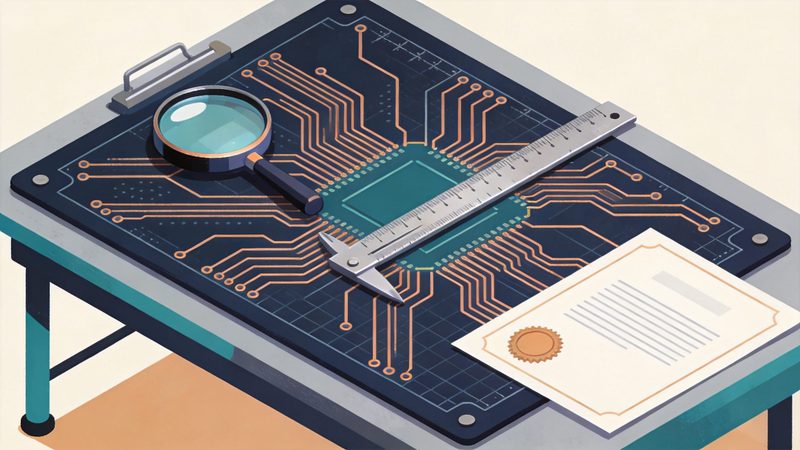
On 30 September CNIPA published three implementing documents together: new Implementing Regulations of the Regulations on the Protection of Layout-Designs of Integrated Circuits (Order No. 86), transitional measures for examination matters (Announcement No. 694) and revised Guidelines for Examination and Administrative Adjudication of layout designs (Announcement No. 695). The transitional measures apply from 15 October, the same day as the revised Regulations; the new implementing regulations and guidelines apply from 30 October, replacing the 2001 regulations and the 2019 trial guidelines.
The new implementing regulations have 56 articles in seven chapters, including a new chapter on exercising the exclusive right. The originality statement must identify the original parts, number several parts and explain each one, and indicate where they appear in the copy or drawing; third parties may request revocation of a registration, and in revocation the holder may only give up claimed original parts, not add or change them. Assignments, licence recordals and pledges require standard forms and written contracts, and assignments or licences to foreign parties also require technology export documentation.
The transitional measures use a filing date of 15 October to divide the old and new Regulations, while allowing earlier registrations to be revoked, restored, recorded as licensed or pledged under the revised Regulations. The new guidelines include a chapter on infringement, confirming that the scope of review is set by the original parts the requester relies on and that design ideas and functional descriptions do not limit protection; CNIPA may handle administrative adjudication of infringement disputes on request and mediate damages.
02 European Patent Office | Accelerated examination | E-filing
One PACE request per EPO application, and fully electronic grant procedure from April 2027

The EPO's September Official Journal brought a group of updates, of which the revised PACE arrangements, the MyEPO case timeline and version 4 of the DOCX definition apply from 1 October. PACE applies only in examination; individual requests must be filed through MyEPO or the online form, and batch requests only through a dedicated MyEPO function. Each application may make one request: if it is withdrawn, an extension is requested, or the application is refused or withdrawn, the application leaves PACE for good, and acceleration is suspended if renewal fees are not paid on time.
The MyEPO timeline shows key procedural events, the current stage, the next expected step and reference dates based on average durations in the technical field; the EPO stresses that this is for information only and is not binding in individual cases. DOCX version 4 incorporates ISO/IEC 29500:2016 and does not change the scope or conditions for DOCX filing.
The longer-term change is full electronic communication from 1 April 2027. Documents in EPC, PCT and unitary patent proceedings must then be filed electronically, and paper filings must be resubmitted electronically within two months of notification; service will take place through the MyEPO Mailbox, documents will be deemed received on the day they become available there, paper copies will no longer be sent in parallel, and third-party observations will only be accepted electronically.
03 Madrid System | United States and WIPO | Filing and payment
US-based Madrid applications move to WIPO's platform and Swiss francs, and WIPO's prepaid account now opens with CHF 200
The USPTO has confirmed that from 1 October new Madrid international applications with the United States as office of origin are filed through WIPO's Madrid e-Filing platform instead of TEASi, and applicants need a WIPO Account first. International fees and the US certification fee are now paid directly to WIPO in Swiss francs rather than in US dollars to the USPTO; the amounts are unchanged. The two systems ran in parallel from 31 July to 30 September.
International applications filed in TEASi before 1 October must be completed in TEASi and cannot switch systems mid-way; subsequent designations may be filed directly with WIPO's International Bureau or continue through TEASi. Madrid e-Filing is already used by offices in more than 40 countries and regions.
In the same period WIPO renamed its prepaid fee account from Current Account to WIPO Wallet and cut the opening deposit from CHF 2,000 to CHF 200; a minimum balance of CHF 200 must be kept, and anyone with at least four transactions with WIPO per calendar year may open one, to pay for online services covering patents, trademarks, designs, domain name disputes and more. The account must be synchronised with a WIPO Account before use, and WIPO may close accounts below the minimum or dormant for two years; existing holders keep their account under the new name.
04 AI-generated content | Copyright | Peru and Malaysia
Peru refuses to register three AI images because human creative input was not proved

On 29 September Peru's Indecopi reported that its specialised IP chamber had upheld, on appeal, the refusal to register three AI-generated images filed by the same applicant. The chamber stated that copyright protects original intellectual creations that come from human creative activity, and that results produced entirely by automated systems or artificial intelligence cannot be treated as protected works.
The applicant argued that AI was only a tool and that they had decided composition, viewpoint, lighting, colour, selection and final editing, revising prompts several times. The chamber found that no evidence had been submitted to verify the degree of human involvement or substantial creative control over the result. The decision is administratively final but can be challenged in court. The point is not that AI-assisted works can never be registered, but that the claim must be supported by evidence.
Malaysia is addressing the same question through legislation. According to local media on 1 October, its IP office is pursuing amendments to seven main IP statutes; the copyright consultation launched in July covers the use of works for AI training and whether, and on what terms, AI-generated content can be protected. No bill has yet been tabled and current law continues to apply.
05 Online marketplaces | Anti-counterfeiting | Mexico and the Philippines
Mexico's IMPI signs a rapid takedown memorandum with AliExpress as the Philippines explores platform cooperation
The head of Mexico's IMPI said on 30 September that the institute has signed a memorandum of understanding with AliExpress, Alibaba's cross-border platform, to exchange information so that listings suspected of infringing Mexican companies' IP rights are taken down quickly, to coordinate seller sanctions and buyer protection, and to explore joint action against repeat sellers of counterfeits; the memorandum runs for one year and renews automatically for two. He said the approach will be extended to Mercado Libre, Amazon and Coppel, though no documents with those platforms have been published.
The Philippine IP office and WIPO announced expanded cooperation to bring IP support to at least 500,000 Filipino entrepreneurs and to explore potential partnerships with online platforms to help merchants protect their brands online. No platforms, timetable or rules have been announced; since 2021 the Philippines has had a voluntary notice-and-takedown framework based on memoranda between brand owners and marketplaces.
In both countries IP offices are beginning to work directly with platforms to shorten the path for removing counterfeit listings. For now these are cooperation plans or arrangements with a single platform, not new legal obligations or fully open complaint procedures for right holders.
Other developments
Other developments
China and Spain launch an IP liaison officer pilot
CNIPA and the Spanish Patent and Trademark Office have launched a China–Spain liaison officer pilot running from 1 October 2026 to 30 September 2027. Each office has designated a liaison officer to advise Chinese companies doing business in Spain and Spanish companies doing business in China on IP questions. The mechanism does not change filing, examination or remedies in either country; deadlines, fees, oppositions and litigation must still go through formal channels and local representatives. CNIPA has run similar pilots with Hungary, Russia and other offices.
Canada's Trademarks Opposition Board publishes its confidentiality order and costs award decisions
CIPO has published a dedicated page listing cases in opposition and Section 45 proceedings since 1 April 2025 in which confidentiality orders or costs awards were requested, with outcomes, updated quarterly. On the current figures, 18 of 31 confidentiality order requests were granted and 10 refused, while 4 of 18 costs requests were awarded and 11 refused. Confidentiality orders are an exception to open proceedings, and costs are limited to listed situations such as withdrawing a hearing request less than 14 days before the hearing, unreasonable conduct causing delay or expense, or an application refused as filed in bad faith. The list shows outcomes only; reasons must be read in the case file.
New China trademark practice guides on the site
This week the site began publishing a series of China trademark practice guides for foreign companies, covering what a pre-filing clearance search does and does not catch, how to choose a Chinese brand name and guard against squatting, post-registration renewals, changes, assignments and licence recordals, and how to choose between opposition, invalidation and non-use cancellation when a mark has been squatted. The guides are published separately in Chinese, English and Spanish and complement the international filing and marketplace enforcement items in this issue.
Practical considerations
Practical considerations
01
Plan layout-design work around 15 October and 30 October
Prepare registrations filed from 15 October under the revised Regulations, with originality statements numbered, located and reasoned; from 30 October handle assignments, licences and pledges on the new forms with written contracts, obtaining technology export documents early for cross-border deals. Check whether existing registrations' statements will support a revocation defence or administrative adjudication.
02
Build the new payment channels into international filing workflows
US-based Madrid applications are now filed on WIPO's platform and paid in Swiss francs, so register a WIPO Account and use one consistent email address; firms paying WIPO regularly can open a WIPO Wallet, fund it according to annual volume and set balance alerts so that low balances or dormancy do not disrupt payments.
03
Name a PACE decision-maker and a Mailbox owner for European applications
With only one acceleration request per application, confirm before filing that no extension will be needed during acceleration and that renewal fees will be paid on time; before full e-filing in April 2027, assign someone to check the MyEPO Mailbox daily, confirm electronic filing access for every case and switch third-party observations to electronic filing.
04
Both AI authorship and marketplace enforcement start with evidence
Where AI is used to create works that may be registered or enforced, keep prompt iterations, parameters, candidates, reasons for selection and editing records; for marketplace enforcement, keep local trademark registrations aligned with platform brand records and prepare infringement evidence templates in the form platforms and IP offices require.
Closing perspective
Closing perspective
Rules are written in the law, but rights are often won or lost in forms, platforms and evidence.
Sorting out channels, accounts and process records in advance is far safer than reacting as a deadline approaches.
Almost every update this week is about how things are done: how to write a layout-design originality statement, when to request European acceleration, which platform and currency to use for a Madrid filing, how to leave verifiable evidence of AI-assisted creation, and which channel removes a counterfeit listing faster.
For an in-house IP team these changes call for updated procedures rather than new legal analysis: a layout-design calendar with the new dates, a payment process that runs through WIPO's platform in Swiss francs, a named owner for the MyEPO Mailbox, and an evidence standard for AI-assisted work and marketplace enforcement. Doing this groundwork early is worth more than repairing gaps when a deadline or dispute arrives.


